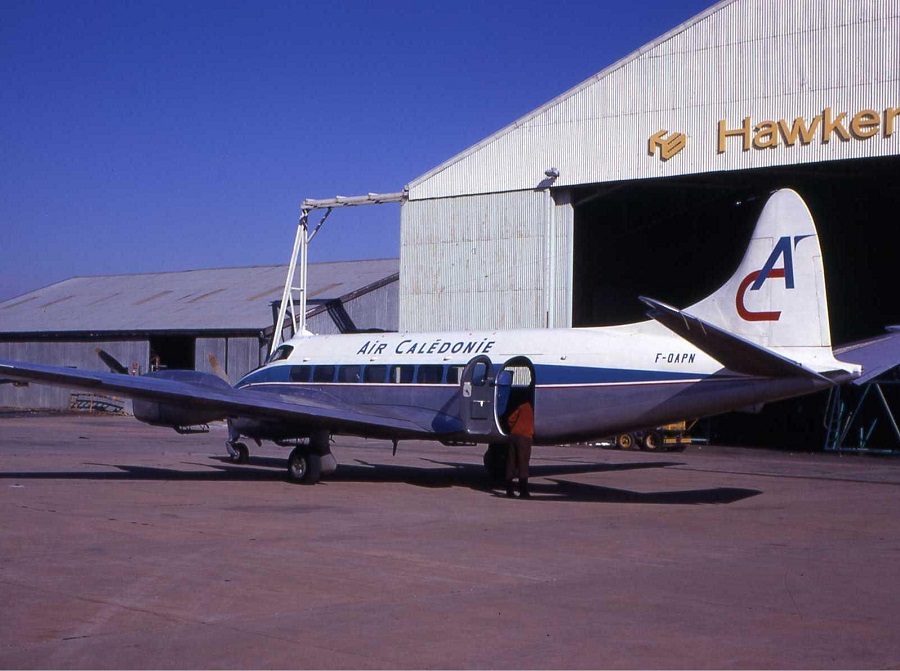
Air Caledonie De Havilland DH-114 Heron
by Steve Mackenzie
Air Caledonie De Havilland DH-114 Heron
Back in issue 36/3 of this publication I covered Air Caledonie (French spelling, English is 'Air Caledonia') more current schemes (2 versions with the 'Hibiscus' tail markings and the most recent with what is similar to a Orange coloured 'Totem Pole'). At the time I mentioned that I knew of at least 4 earlier versions of their markings, I now can say make that five as another turned up during research to do the profiles. Societe Caledonienne de Transports Aeriens, trading as Air Caledonie (Air Caledonia in English) is the domestic airline of the French collective of New Caledonia. Originally created in 1954 as Transpac, it has operated Twin Otters since 1968. The company is split into two entities, Air Caledonie which operates the domestic services (currently operating four ATR-72 airframes but it originally used Twin Otters in a number of different schemes) and Aircalin (Air Caledonie International which operates international routes) for which two Twotters were used to supply an air service between the Wallis et Futuna Islands (which are a separate entity to New Caledonia) under a long running contract (the current 5 year contract at the time ran till 2023). However the new contract from 2023 went to Air Loyaute (as per issue 39/2) and Aircalin disposed of the 2 Twin Otters which had been servicing that route (one of them transferred across to Air Loyaute).
Originally formed as Transpac in 1954 the airline used a DH-89 Dominie, later several DH114 Herons, 2 BN Islanders and 2 Dornier Do-228s at various times were operated. The original markings used on DHC-6 Twin Otters they started acquiring in 1968 consisted of 'AC' on the tail and 'Air Caledonie' in italicised lettering on the fuselage. At least one Heron still in service carried similar markings as per the header image. I have few images of this original 1968 scheme.
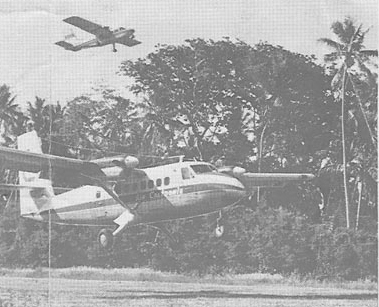
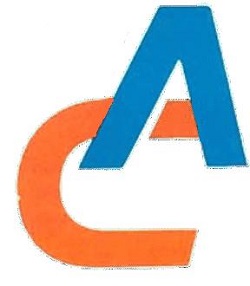
Note while the AC logo looks Blue and Orange, on the airfarmes it was actually Blue/Red.
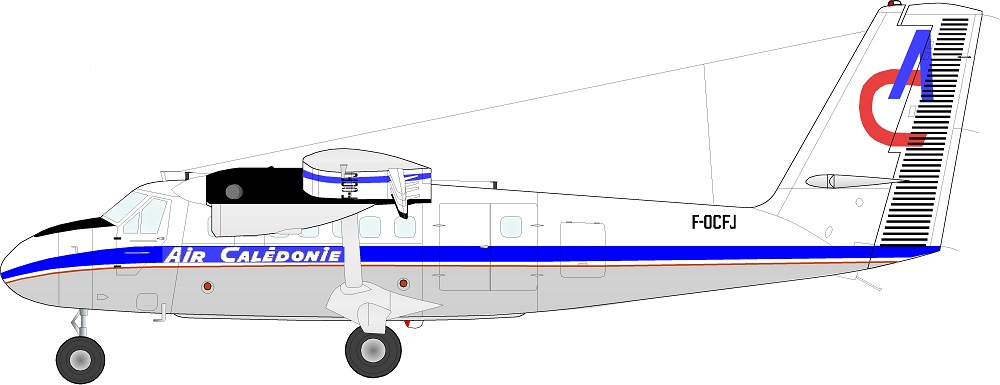
Profile of F-OCFJ the first known airframe in 1968. This was an early series 100 airframe (with the shorter nose), actually the 9th airframe built. Fuselage is mostly White with the lower fuselage in Metallic Grey. 'AC logo' on tail with Air Caledonie in White italicised script on the fuselage. Fuselage and wing stripes are Medium Blue. The usual Black areas on the cowling to cover exhaust stains, anti-glare panel and regos (fuselage and under wing). Not to be missed is the narrow Red pin stripe below the larger Blue one. In the photos taken at Mascot in 1968, areas such as the under carraige fairings, wing and tail end plates and lower cowl appear to be natural metal.
It had been the Hawker De Havilland demo airframe (in full TAA colours with the Canadian rego CF-UXE) with the noted areas in Natural Metal. It was sold to Air Caledonie in 1968 and when photographed per the following sources (images I cannot reproduce due to copyright) it already had it's new rego F-OCFJ under the wing and masked out on the fuselage.
https://twinotterworld.com/msn-9
https://www.alamy.com/de-havilland-canada-dhc-6-twin-otter-series-1-msn-9-cf-uxe-of-air-caledonie-at-bankstown-nsw-on-delivery-to-air-caledonie-at-noumea-image560779364.html?imageid=C73900AC-760D-45B3-83F7-BB41C41112A1&pn=1&searchId=7e622f01803bdf699caa249c84512b17&searchtype=0
The next scheme consisted of White upper and metallic Grey lower surfaces with Dark Blue fuselage and tail bands, plus upper engine cowlings. There is White pin striping on the fuselage band and engine cowlings, lower engine cowling and spinners are also White, as is 'Aircal' on the tail. Black regos and leading edges of the wings and vertical tailplane. F-OCFJ was originally in this scheme with it's short nose, later it was upgraded with a 200 series longer nose per an image at 'https://www.airhistory.net/photo/3843/F-OCFJ'.
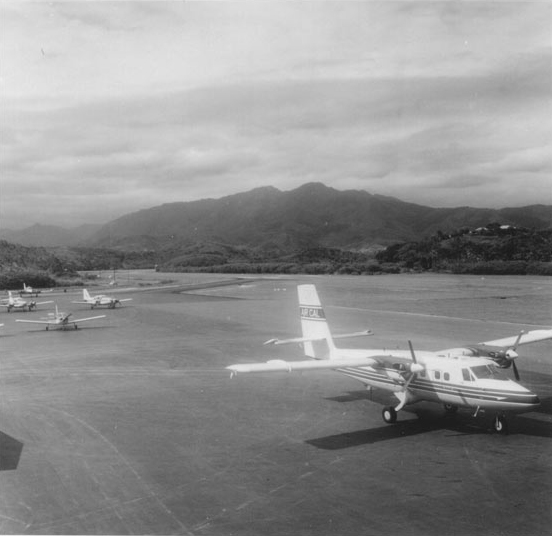
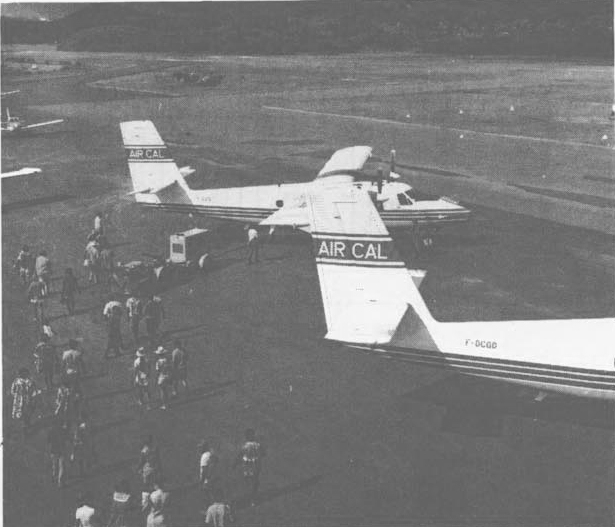
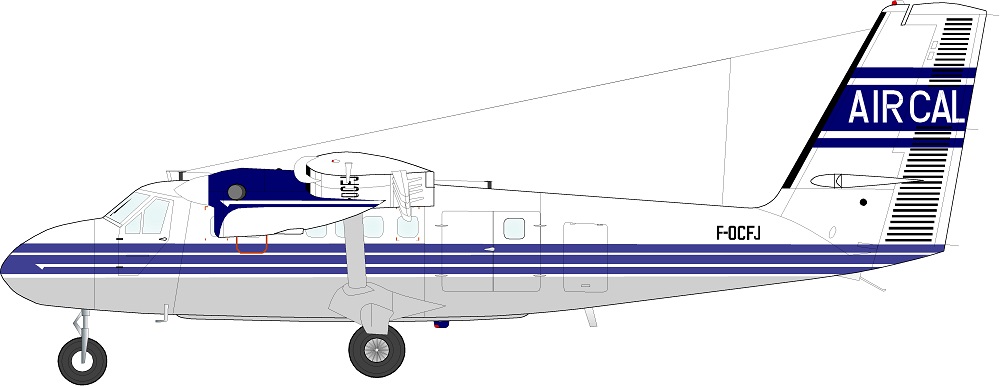
Profile of F-OCFJ still with series 100 nose in the above scheme as noted. There were at least 3 airframes in this scheme including F-OCQF, I finally was able identify the rego on the closest one in the image above as being F-OCGD (msn 286) which was with them from 1970-1975. Images I cannot post for copyright reasons include
https://twinotterworld.com/msn-9 and
https://www.airhistory.net/photo/57990/F-OCQF
Click on the 'Next' button to go to Page 2 of the article